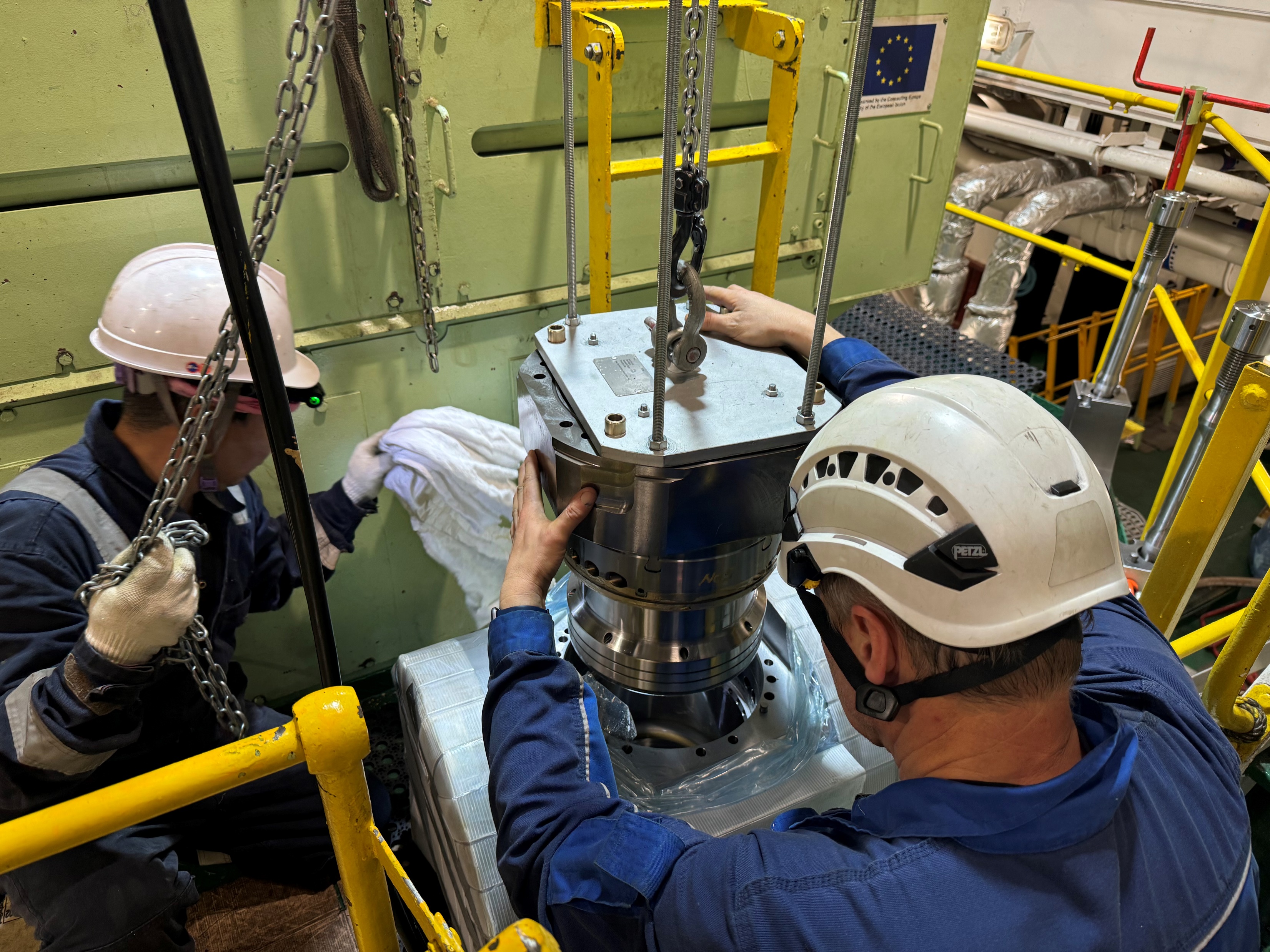
Why Variable Compression Ratio technology is a practical retrofit path to 2030
At WinGD, we spend a lot of time looking ahead – at future fuels, new engine concepts and long-term decarbonisation pathways. But we are equally focused on a more immediate question: how can shipowners reduce emissions from the vessels that are already operating today?
That question sits at the centre of our new white paper, LNG-Fuelled Fleets Reducing Emissions: VCR retrofitting as a ready solution. It examines how Variable Compression Ratio (VCR) technology can be applied to existing LNG dual-fuel engines to deliver measurable emissions reductions within the timeframe set by the IMO’s 2030 targets.
Working with the fleet that already exists
The reality is that most of the ships trading in 2030 will not be newbuilds. For us, this means decarbonisation solutions must extend beyond future engine platforms and focus on improving the performance of engines already in service.
VCR does exactly that. Available as standard on our X-DF2.0 engines and retrofit-ready for existing X-DF LNG dual-fuel engines, it enables shipowners to improve efficiency, reduce methane slip and extend regulatory compliance without waiting for fleet renewal.
Importantly, this solution is also available for the RT-flex50DF engines. There are around 50 engines in the global fleet that could be retrofitted, extending the benefits of VCR technology to a broader installed base of LNG dual-fuel vessels already in operation.
By dynamically adjusting the compression ratio in real time, VCR optimises combustion across varying loads and operating conditions. In practice, this translates into lower fuel consumption in both gas and diesel modes, alongside significant reductions in methane slip at partial loads.
Delivering results without operational disruption
One of our key design objectives with VCR was to ensure it could be deployed with minimal impact on vessel operation. The system is fully integrated into the engine control architecture and requires no crew intervention.
Just as importantly, VCR retrofits can be carried out during scheduled dry-dockings. This allows operators to turn planned maintenance into a performance upgrade, avoiding additional off-hire time while delivering tangible environmental and commercial benefits.
From theory to reality: early adoption and market uptake
The commercial case for VCR became clear quickly. Since its launch in 2023, more than 170 orders have been placed for VCR systems. While early uptake has been strongest in the LNG carrier segment, interest is broadening, with orders now spanning pure car and truck carriers, bulk carriers and container ships.
This growing adoption reflects a wider industry realisation: improving the efficiency of LNG engines already in service is one of the fastest and most scalable ways to reduce emissions this decade. For many operators, VCR offers a practical way to deliver measurable results now, rather than waiting for future fuel pathways to mature.
From development to deployment
Since its introduction, VCR has moved rapidly from development into commercial operation. At the same time, it supports longer-term fuel strategies. While optimised for LNG today, the technology is compatible with future fuels, helping shipowners manage uncertainty while protecting asset value.
A realistic step forward
From our perspective, VCR represents a pragmatic approach to decarbonisation. It does not rely on unproven infrastructure or future regulation; it delivers measurable improvements using technology that is available now.
For shipowners operating LNG-fuelled vessels, it offers a credible path to reducing emissions, lowering operating costs and extending the useful life of existing assets.
The white paper, LNG-Fuelled Fleets Reducing Emissions: VCR retrofitting as a ready solution, explores the performance data, engineering considerations and real-world retrofit experience behind VCR in more detail and is available for download from the WinGD website.
For further more information or to discuss in more detail please contact retrofit.solutions@wingd.com