
1,000 engines and counting: How WinGD’s X-DF became the benchmark for LNG shipping
WinGD has reached a major milestone, announcing its X-DF dual-fuel engine has now passed 1,000 orders. For WinGD, the milestone represents more than sales volume, signalling continued confidence in LNG as a transition fuel and highlighting how one engineering response to a regulatory challenge helped reshape the direction of modern shipping.
The X-DF origin story
Engineers are trained to solve problems. So, when the IMO introduced stricter Tier III NOx emission limits, WinGD’s engineers moved quickly to address both the technical and commercial challenges faced by shipowners. In February 2011, work began in earnest to develop a dual-fuel low-speed gas engine capable of meeting the new emission requirements without the need for additional exhaust after-treatment systems.
Only seven months later, on the 19th of September, the new technology was successfully demonstrated on a full-scale research engine at the Wärtsilä factory in Trieste, Italy. By 2013, WinGD had introduced the X-DF engine series, a launch that marked the beginning of a major shift in marine propulsion.
Using low pressure gas admission ignited by a low volume of liquid pilot fuel, the X-DF represented a breakthrough for the shipping industry offering an attractive CAPEX/OPEX balance together with simple and reliable operation The technology enabled compliance with IMO Tier III NOx regulations while also significantly reducing SOx emissions, particulate matter and greenhouse gas emissions compared with conventional marine fuels.
World record-holder
Fifteen years later, the scale of that breakthrough is clear. Not only have orders surpassed 1,000 units, but the order book has expanded from LNG carriers to include ultra-large container ships, shuttle tankers and very large crude carriers. Since the second half of 2017, the X-DF has been the best-selling dual-fuel low-speed engine technology in the LNG carrier market.
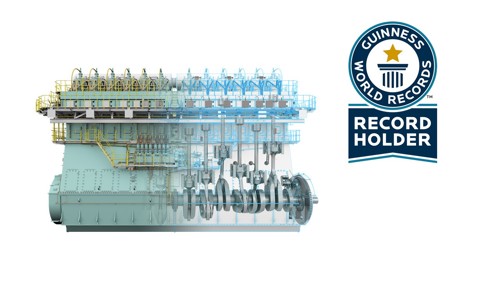
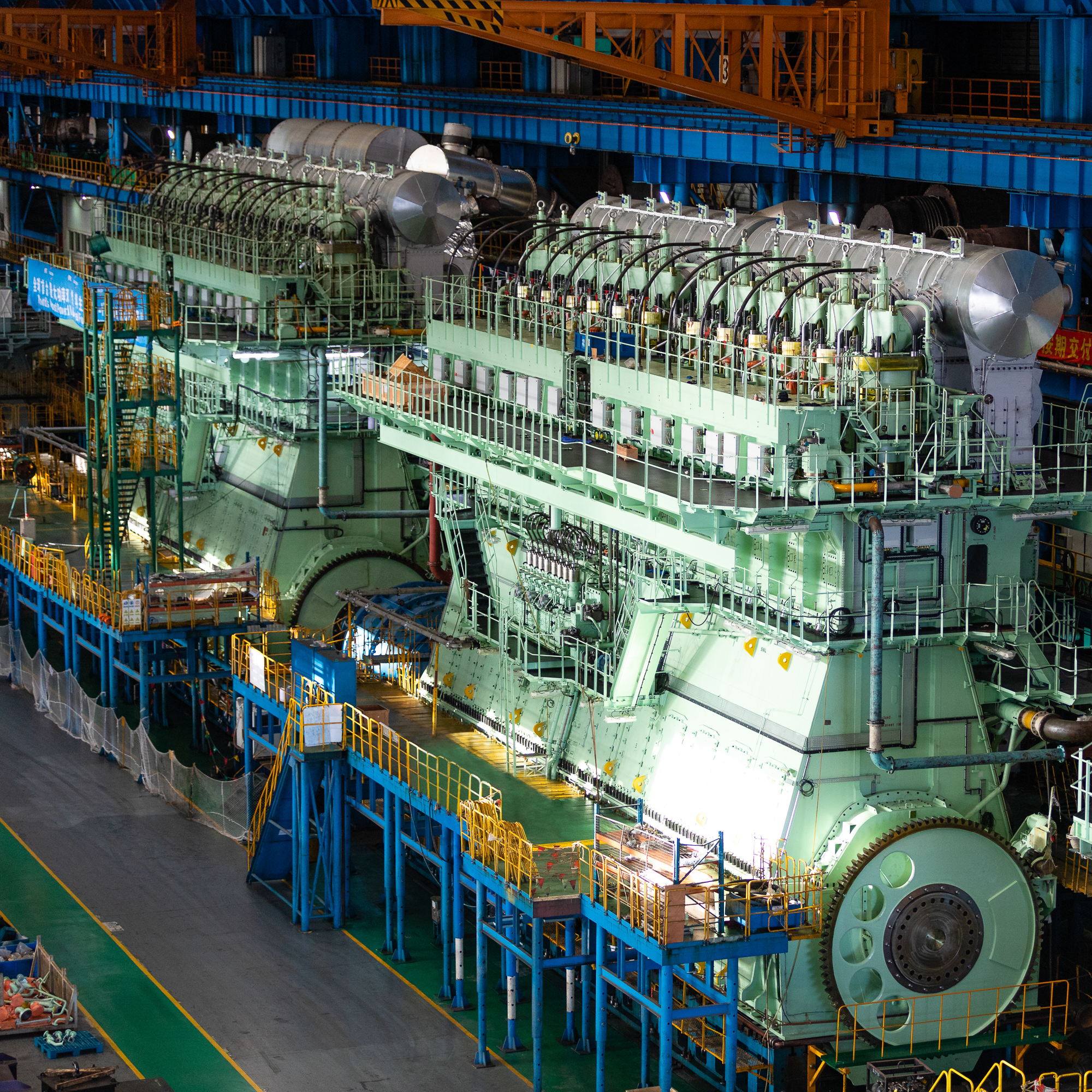
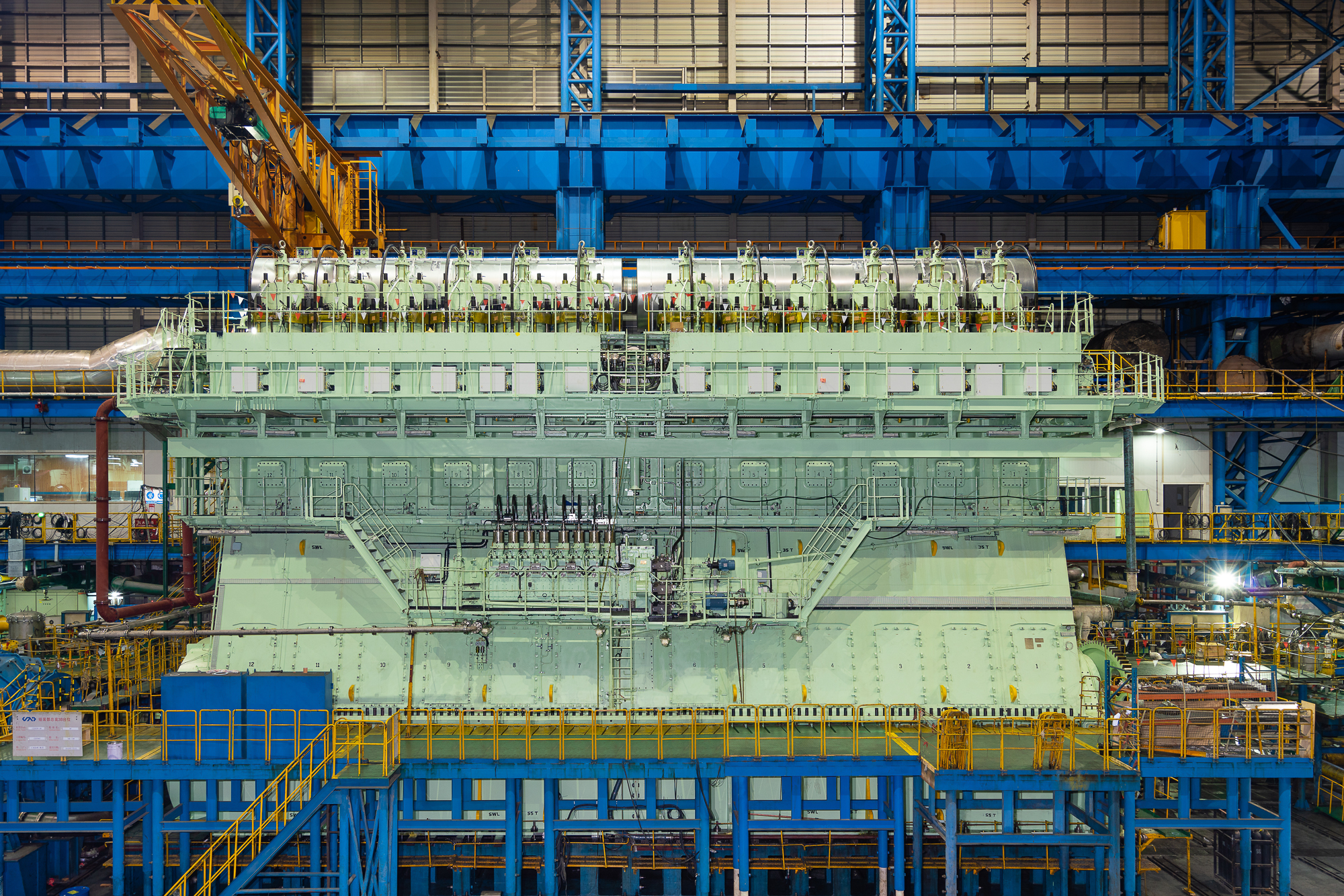
It even has a world record to its name, with the 12X92DF engine recognised by Guinness World Records in 2020 as the ‘Most powerful marine internal combustion ( IC) engine (otto cycle) commercially available’. First delivered in 2019, the 2,140-tonne engine generated 63,840 kW at 80 rpm and was installed aboard one of the 23,000 TEU LNG-fuelled containerships operated by French shipping group CMA CGM.
Engineering elegance
The engine’s appeal isn’t limited to its environmental performance. The WinGD engineers found a solution that combined regulatory compliance with operational simplicity and commercial pragmatism. The engines met Tier III NOx limits without requiring exhaust gas after-treatment systems, helping reduce both capital and operating costs. The technology also consumed very small quantities of pilot fuel while maintaining the reliability expected from low-speed two-stroke propulsion engines. The combination of efficiency, simplicity and reliability adds up to an attractive price point for shipowners.
And the problem-solving didn’t stop there. The X-DF has been on a journey of continuous iteration over the past decade, with WinGD’s engineers steadily improving engine efficiency and environmental performance, particularly through innovations designed to reduce methane slip - one of the key challenges associated with LNG as a marine fuel. Those developments have strengthened LNG’s position as a lower-risk compliance option under evolving regulatory frameworks, including FuelEU Maritime requirements.
Today, X-DF engines running on LNG can avoid FuelEU Maritime penalties until at least 2035, providing owners with greater regulatory certainty amid shifting global and regional emissions rules.
With the introduction of X-DF2.0 and iCER, WinGD achieved a further step in reducing both fuel consumption and methane slip. The technology improved efficiency in gas mode while significantly reducing methane slip compared with the first-generation X-DF platform. This evolution has been further strengthened by Variable Compression Ratio VCR technology, which allows the compression ratio to be optimised according to operating conditions. In combination with X-DF2.0, VCR provides an additional reduction in gas consumption in gas mode, fuel consumption in diesel mode and methane slip. For the X72DF-2.2, this brings methane slip down to around 0.7%, while larger-bore engines are expected to reach even lower levels 0.5%.
WinGD continues to invest in methane-slip reduction, with further design and technology improvements already communicated to key stakeholders.
Future fuel ready
Importantly, the platform has been designed with future fuels in mind. The X-DF range is already capable of operating on carbon-neutral fuels such as biomethane and synthetic methane derived from renewable electricity, without requiring major engine modifications. That capability gives owners a pathway toward progressive decarbonisation while protecting vessel value as fuel markets continue to evolve.
For many operators, that flexibility has become increasingly important. Rather than committing to a single long-term fuel strategy today, shipowners are looking for technologies that can deliver immediate emissions reductions while preserving future optionality. WinGD’s X-DF platform has positioned itself squarely within that space: combining proven technology, fuel flexibility and regulatory resilience at commercial scale.
1,000 units, and counting
And the orders keep coming, a signal of continuing market confidence not only in the X-DF but also in LNG as the transition fuel of choice for pragmatic shipowners. Most recently, BW LNG ordered two 174,000 cu.m LNG carriers to be built at HD Hyundai Heavy Industries, each powered by WinGD 5X72DF-2.2 VCR engines to be manufactured by HHI-EMD. Engine delivery is expected in mid-2028.
The continued growth of the WinGD portfolio has also been strengthened by the introduction of the X-DF-HP engine platform, further extending the LNG offering into high-pressure technology for larger bore applications. Alongside the established low-pressure X-DF concept, the introduction of X-DF-HP means shipowners can now select between two distinct LNG combustion concepts, each optimised for different vessel applications, operational priorities and decarbonisation pathways.
From a research engine tested in Trieste in 2011 to more than 1,000 engines ordered worldwide, the X-DF story illustrates how rapidly maritime innovation can scale when engineering excellence, technology, regulation and market demand align.
Media Contact

-
Email
kami@knightsmpr.com -
Tel
+44 7947 697 653
WinGD in brief
WinGD advances the decarbonisation of marine transportation through sustainable energy systems using the most advanced technologies in emissions reduction, fuel efficiency, hybridisation and digital optimisation. With their two-stroke low-speed engines at the heart of the power equation, WinGD sets the industry standard for reliability, safety, efficiency, and environmental design - supported by Global Service by WinGD, which delivers tailored 24X7 lifecycle engine support through Swiss engineering excellence, dependable maintenance, rapid global response, and genuine parts to keep engines performing at their best.
Headquartered in Winterthur, Switzerland since its origin as the Sulzer Diesel Engine business in 1893, today it is powering the transformation to a sustainable future.
Follow WinGD on LinkedIn for the latest news and updates.